Ballpark Estimate: $15,500 to $87,500
Early expeditions to the North Pole were difficult, if not impossible, to verify. The generally accepted claim that Robert Peary’s 1909 expedition was first to arrive at the Pole remains somewhat in doubt and, even today, the 1926 over-flight of the Pole by Richard E. Byrd is questioned by some. However, for better or worse, a trip to the North Pole is now available to anyone with a well-loaded credit card.
Where and When to Go
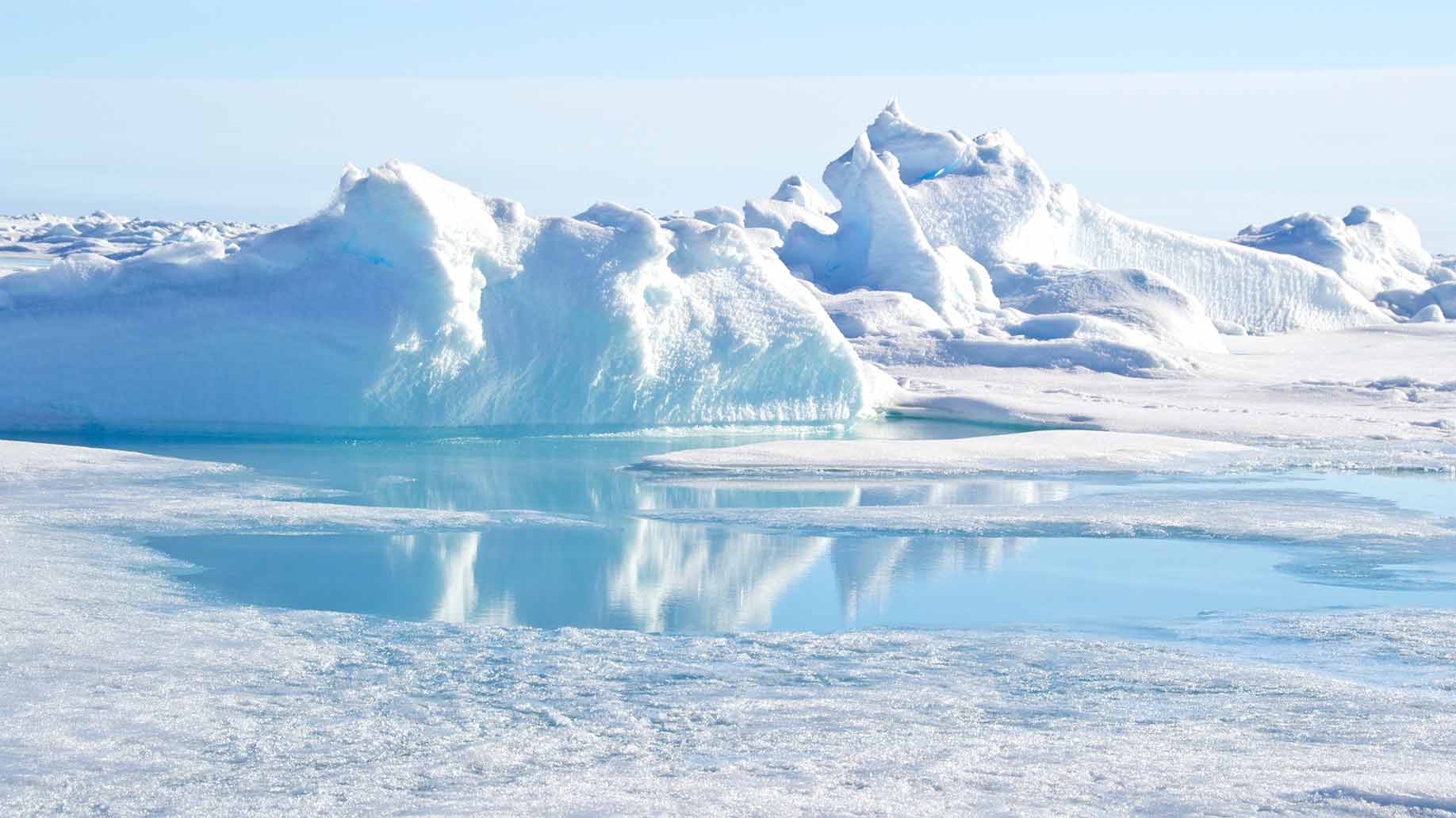
While the Magnetic North Pole is currently situated near Ellesmere Island in northern Canada, the Geographic North Pole is located at 90°N – the top of the world – on a frozen section of the Arctic Ocean. The North Pole is a warmer, somewhat friendlier place than the frigid South Pole. Winter temperatures at the North Pole can range from about -15°F to -45°F, but summer (June – August) temps sometimes reach a balmy 32°F. During the winter months, there is 24-hour darkness, while the summer months enjoy 24-hour daylight. Consequently, tourist cruises, flights, and most expeditions take place during the summer. If you plan to take part in an extended skiing expedition, however, you’ll depart earlier in the season.
The Arctic Ocean beneath the North Pole is about 2.5 miles deep; the ice floes at the Geographic North Pole average between 7 to 10 feet thick.
Airfare
If you will be flying to the North Pole, you’ll most likely leave from Longyearbyen, the capital of Svalbard, on the island of Spitzbergen, Norway.
- $2,120 to $3,815 – Round trip from New York City (LGA) to to Longyearbyen (LYR)
- $1,635 to $5,510 – Round trip from Chicago (ORD) to Longyearbyen (LYR)
- $2,080 to $5,860 – Round trip from Los Angeles LAX) to Longyearbyen (LYR)
If you choose to go through a Russian tour company, you’ll fly to the North Pole from Moscow.
- $1,245 to $3,145 – Round trip from New York City (LGA) to Moscow (MOW)
- $1,380 to $5,525 – Round trip from Chicago (ORD) to Moscow (MOW)
- $1,370 to $6,000 – Round trip from Los Angeles LAX) to Moscow (MOW)
If you plan to travel to the North Pole on board a nuclear icebreaker, you’ll leave from Murmansk, Russia. You’ll fly from the United States to Moscow first, and then either fly or take the train to Murmansk. There’s a new, budget airline in Russia with fares to Murmansk for under $200.
While all icebreaker cruises leave from Murmansk, some Finnish companies depart from Helsinki, Finland. The flight from Helsinki to Murmansk is included in the cost of the cruise.
- $1,150 to $1,600 – Round trip from New York City (LGA) to Helsinki (HEL)
- $1,150 to $1,475 – Round trip from Chicago (ORD) to Helsinki (HEL)
- $1,290 to $1,740 – Round trip from Los Angeles LAX) to Helsinki (HEL)
Gear and Clothing
Depending on the travel package and company you choose, you may have to bring your own cold weather clothing and gear, or the company may provide you with everything you need, from long underwear to skis and poles.
Passports and Visas
A valid passport is required for all international travel. While it is not necessary for citizens of the United States to obtain a visa to enter Finland and Norway, a visa and other paperwork are required to enter Russia. Cost for a 30-day visa is $131
By Air
You can find flights to the North Pole through American, Norwegian, British, or Australian guide services, flying out of Longyearbyen, or Russian tour groups, flying from Moscow. All tours land on the blue ice runway at the Russian research base, Ice Station Borneo, located at 89°N.
North Pole in a Day
This tour is open to people of “any age and any health condition.” You fly from either Moscow or Longyearbyen to Ice Station Borneo. From there, you board a helicopter and fly about 40 minutes to the North Pole. You are allowed about two hours on the ground to take pictures, build a snowman, or “hug the terrestrial axis” – a pole that Russian tour operators install in the ice for that purpose. You then return to Borneo for lunch, champagne, and your return flight. Cost: $17,600 to $18,000
Overnight at Borneo
You fly to Ice Station Borneo and, weather permitting, you immediately board a helicopter and fly to the North Pole where you spend about two hours on the ground. You return to Borneo for a celebratory dinner, spend the night in heated tents (sleeping on bunks and mattresses), and then fly home the next morning. Cost: $18,500
Two Days at Borneo
You fly to Borneo, immediately take a helicopter to the Pole, spend 2 hours there, return to Borneo, and stay for two more days at the ice station. You will live in heated accommodation tents, sleep in bunks with mattresses, eat good food and socialize with other tourists and adventurers. Cost: $18,900 to $19,500
Overnight at the Pole
You fly to Borneo, spend the night, and then fly by helicopter to the North Pole. Once there, your guides will set up camp and everyone will help cook an evening meal on camp stoves. There will be champagne and hot drinks, along with warm sleeping bags, provided by the guide service. The next morning, a helicopter will return you to Borneo where you will have lunch, and then leave by plane for home. Cost: $23,300 to $24,000
Six-day Visit
This British-sponsored trip flies from London to Longyearbyen to Ice Station Borneo. You take a helicopter directly to the North Pole, stay an hour, and then return to Borneo where you relax at the Ice Station for four more days, socializing and sightseeing before returning by plane to London. Cost: $24,000
Over Land – Ski Trips
3-hour Ski to the Pole
You fly to the Borneo Ice Station, have lunch and dinner in the dining tent, and sleep in heated “accommodation tents” (with bunk beds). The next day, you have a 35-minute helicopter flight to within 3-5 km of the Pole. Your group skis “slowly” for 3 hours to the North Pole where you set up camp and spend the night. The next day, a helicopter picks you up and returns you to Borneo for a champagne lunch, followed by your plane flight back to Longyearbyen. Cost: $24,750 to $26,800.
2-day Ski to the Pole
Your first day is spent at the Borneo Ice Station, getting used to your equipment and skis. You will sleep in expedition tents, but will be close to Borneo where you can pop in for a hot cup of tea in the dining tent, if you’d like. The next day, a 30-minute helicopter flight takes you within 10-15 km of the North Pole. Your group will ski about 6-7 hours, set up camp, and sleep in tents on the ice. The next day, you’ll continue to ski, reaching the Pole by afternoon. You camp there overnight, make a satellite phone call to a loved one, build a snowman, etc. and you’re picked up the next day and flown, by helicopter, back to Borneo for a champagne dinner. You leave that evening by plane, for Longyearbyen. Cost: $27,250.
40 to 50 km Ski to the Pole
(5 days/4 nights on the ice) – You fly to Borneo and then take a helicopter to within 40-50 km of the Pole. Each member of the group pulls a lightweight sled loaded with a small amount of supplies. This trip gives skiers a great North Pole adventure ski experience, but distances are much shorter and the pace is much easier than in longer, more serious expeditions. You will sleep each night in expedition tents, but your food is of a higher quality and your exposure to the cold during the day isn’t as intense. The entire trip has a rather lighthearted feel to it. You are guaranteed an overnight campout at the Pole, along with a satellite phone call and a group snowman construction. The next day, you fly by helicopter back to Borneo for champagne and a celebratory meal, followed by an evening flight to Longyearbyen. Cost: $28,560.
Ski the Last Degree
(12 day trip; 9 days on the ice) – This trip is identical to the trip described above, except that you ski from the Borneo Ice Station (89°N) to the North Pole, a distance of 69 miles, over 7 to 8 days. You will haul heavier loads and the expedition requires better physical conditioning, skill, and stamina. All equipment, clothing, food, etc. is supplied by the tour company. Cost: $29,300.
Ski Last Two Degrees
(23 day trip; 22 days on the ice) – Some tour companies call this their “North Pole Extreme” trip. You meet your guides and group in Longyearbyen, where you are outfitted with gear. Included in the price of your trip are tents, sledges, stoves, fuel, skis, boots, poles, backpack, major expedition clothing (windproof insulated coats, head and hand gear, pants, etc.), and much more. The expedition clothing and backpack will be yours to keep. Also included in the cost is the use of a satellite GPS, a 2-minute satellite phone call to a loved one, your professional guide, all food while in Antarctica, ski lessons, and many more services. Cost: $27,850 to $30,200.
You fly to Ice Station Borneo where you board a helicopter and fly south to 88°N – approximately 138 miles from the Pole. Each member is harnessed to his or her own heavily-laden (85-110 lbs.) sled. Depending on the structure of the trip, you will spend anywhere from 8 to 20 days on the Arctic ice, living from the supplies you have brought along. You will have no outside support. Teamwork is essential to the success of this trip, and everyone helps out with cooking, route finding, and watching out for polar bears. You will experience complete isolation until you reach the North Pole. Once there, depending on weather and timing, you may camp overnight before a helicopter arrives to take you back to Borneo. After the 40-minute flight, there will be a champagne ceremony. You may spend the night at Borneo (hot meals and warm bunks) before flying back to Longyearbyen.
Unsupported Trips
Ski the Last Degree
(Unsupported) – Even for $15,500, you are very much on your own on this trip. The company will fly you from Moscow to Ice Station Borneo. You, however, are responsible for all your own supplies, sleds, fuel, food, stove, radio, etc. If you feel you need a guide, the company can supply one for an extra fee. Starting date should be between April 15 – 18, and the company allows you 5 to 7 days to ski to the Pole. They will eventually send a helicopter to fly you back to Borneo. While you’re on the ice, you must supply your own support group (doctor and radio operator who stay at the ice station). In fact, the company suggests that you bring along “a friend or girlfriend to control your movements along the route.” Cost: $15,500.
Extreme Expeditions
For those who want to truly test themselves in the Arctic, one of the most extreme North Pole expeditions attempts to cross the Arctic Sea, from Siberia to Canada, on skis. You will have to find your own sponsors for this trip – no commercial company offers it. Cost: $25,000+.
Short of that, there are expeditions originating in Canada (Ward Hunt) and Siberia (Cape Arktichevsky) that attempt to ski the 480+ miles to the North Pole. You are advised to start no later than the beginning of March. You can choose one of two styles for your attempt: “autonomous” (you haul everything with you on sledges) or “merciful” (you haul a limited amount of food, fuel, and supplies, and the rest is delivered by helicopters or parachuted from aircraft as needed). Either way is extreme and dangerous. Route-finding is a challenge, and the list of hazards, from terrain to polar bears, is intimidating, to say the least. Depending on the amount of support you require, this trip could cost at least $25,000 per person – much more if you require search and rescue – and you must purchase all gear, food, clothing, fuel, and supplies separately.
By Water and Ice – Nuclear Icebreaker Yamal
Powered by a 75,000 horsepower engine, the Russian icebreaker Yamal is the very latest in ice breaking technology. The ship leaves from Murmansk, Russia, and is the only icebreaker currently taking tourists to the North Pole.
- $23,000 to $39,000 depending on occupancy (standard, double, private) – These 16-day trips (mid-June to early August) leave from Murmansk and cross the Barents Sea, breaking into Arctic pack ice up to 5 meters thick. You’ll see polar bears, walrus, beluga whales, sea birds, and other wildlife, and helicopter tours are available from the ship. Once you get to the Pole, you’ll have the opportunity to explore a bit and then return via Franz Josef Land, an archipelago of 191 mostly unexplored islands.
- $23,000 to $39,000 depending on occupancy (standard, double, private) – This is the same trip as above, for the same price. However, this trip leaves from Helsinki, Finland. Round trip flights from Helsinki to Murmansk are included in the price.
Dogsled and Ski
- $37,500 – 12-day Last Degree Trip
- $44,500 – 17-day Last Two Degrees Trip
Both trips include either a 5-day dog sled training course in Minnesota in January, or a 3-day dog sled training course in Longyearbyen just prior to the expedition. The cost also includes guides, food, a satellite phone call home, and all group gear. You are responsible for your own cold-weather expedition clothing and gear: skis, boots, poles, sleeping bag, etc. Everyone helps drive the sleds, prepare food, set up camps, and care for the dogs. Once you arrive at the North Pole, the group celebrates with champagne, pictures, and an overnight campout. The next day, you’re picked up by helicopter, returned to Borneo Ice Station, and then flown back to Longyearbyen.
Ward Hunt to North Pole Trip
Billed as the “Everest of North Pole expeditions,” this trip is offered by NorthWinds, a company owned and operated by world-class polar guide and Baffin Islander Matty McNair and her two adult children, Sarah and Eric. The trip is priced at $350,000, to be divided equally among a maximum of four paying customers. You will leave from Iqaluit in March for a training trip, and then fly to Resolute and on to Ward Hunt (a small island just north of Ellesmere Island). From there, you will set off on the professionally-guided tour, mushing dog teams across 478 miles of windblown, shifting pack ice. You will ski 6 to 8 hours a day, and handling the dog teams and sleds will require enormous strength and stamina. You should allow 52 days to complete the entire expedition, including training and preparation time. Cost: $87,500
Novelty Trips
Skydive the North Pole
(3-6 day trip, depending on weather) – Clothing and gear are not included. There are almost no restrictions on skydiving at the North Pole. If you are experienced and have your own gear, you can jump solo. If you need a tandem dive, arrangements can be made, but give the company plenty of notice and be prepared to pay extra. If you go with the Russian company and your group is large enough to warrant a plane this size, you will fly 5 hours from Moscow in an Iluyshin-76, jump out over the Pole, spend a few hours there, and then a helicopter will fly you to the ice station. From there, you’ll take your plane back to Moscow.Cost: $14,750 (Moscow) to $25,800 (Norway)
Because the Borneo Ice Station is a Russian station, Russian guide companies take advantage of its blue ice runway and relatively “civilized” accommodations, offering a unique variety of North Pole experiences. North Pole Adventures, under the management of director Sergei Insarov, sponsors the following one-of-a-kind events.
- $14,750 per person – One Day Group Trip (10 to 40 people)
The price covers all expenses Moscow to Moscow, with a choice of intermediate points along with way: Murmansk, Archangelsk, Vorkuta, Norilsk, Khatanga, or the archipelagos. This is not your choice, though – the organizers choose the stop-off points, depending on weather and convenience factors.
You will be flown to the ice station and then, if all goes well, you will continue by helicopter to the North Pole. Your “guides” will use a GPS to locate the Pole, drive a stake (“terrestrial axis”) into the ice at that location, surround it with flags representing all participants of the current tour, and then photograph you “hugging” the axis. You will then be served vodka, champagne, sandwiches, vegetables, and fruit. They caution, “Everything but vodka freezes quickly, so toasts should be short.” After 2 to 4 hours, you return to the ice base, board your plane, and immediately leave for Moscow where you’ll have a banquet and be awarded a North Pole visitation certificate. However, NP Adventures mentions that delays at the ice station can occur for various reasons, in which case you will be accommodated in warm tents, and tea, coffee and hot food will be made available.
Hot Air Balloon Festival
Swedish engineer and explorer, Salomon Andrée’s ill-fated 1897 attempt to reach the North Pole in a hydrogen balloon was commemorated 100 years later, when the first North Pole Hot Air Balloon Festival was held. Every April since then, balloon teams gather at the Pole from all over the world. Sponsors are often sought for these flights – company logos are attached to balloons which are photographed flying over the Pole, anchored securely to the terrestrial axis. The fee covers your expenses from Moscow to Moscow, and ideally, this is a one day visit to the Pole, although you may have to wait at the ice base for good weather. Cost: $14,750 per person + $14,750 per balloon
North Pole Honeymoon Trip
For a truly unique honeymoon experience, this trip covers your Moscow to Moscow expenses and offers double-occupancy in a tent either at the North Pole or at the Borneo Ice Station for any length of time between April 10-25. “Food, drinks, and privacy” are included in the cost. If you’d like this experience but are not married or married before 2007, the cost is $29,500 (per couple) for a one week stay. Cost: $14,750 (per couple) for April 2008 newlyweds; $16,200 if married earlier in 2008; $26,500 if married in 2007.
Other Opportunities for $14,750
Ice Sculpture Festival – Cost covers all expenses Moscow to Moscow. You and other sculptors will stay 3 to7 days at the North Pole. Ice and snow blocks will be pre-cut for you, and you may choose the location for your sculpture. Accommodations are warm tents and dinners. At the end of the week, a new group of tourists arrives, and will photograph your sculpture “for posting on the Internet!” Returning from the North Pole, your plane will stop in the Russian town of Khatanga, where you are asked to participate in group ice sculpture projects for the local population.
Pilot the Pole
You and nine other passengers take turns at the controls of a Antonov-2 biplane for a 5-minute “around the world” flight, supervised by an NP Adventures co-pilot.
Booze at the Pole
North Pole Adventures calls this their Plus-minus 40 Degrees trip, “for those who can appreciate hard drinks not freezing even at minus 40 degrees Centigrade.” Your group will be flown from Moscow to the Borneo Ice Station and then on to the North Pole, where you will have the once-in-a-lifetime opportunity to drink as much vodka as you possibly can at the top of the world. Pickled cabbage and other vodka-appropriate snacks are served. Your “guides” will then help you back onto the helicopter for what may prove to be a truly nauseating 40-minute flight back to Borneo. Once there, you vomit copiously, board your plane, and return to Moscow, with a world-class hangover and a sheepish grin on your face.
All European Polar Weekend
Advertised for “Europeans and people all over the world,” this promises to be a highly social polar experience. You and 154 others leave in a big jet from Frankfurt, Germany. Passengers are then shuttled, by helicopters, to the Pole and back. Much vodka is served, many pictures are taken, and the terrestrial axis is enthusiastically hugged.
Fly for Free!
North Pole Adventures proves its creativity and we’ll-try-anything nature by offering free passage to the North Pole to anyone who can provide them with at least ten full-paying customers.